

Time Travel Through Virtual Reality: How VR Helps Older Adults Reconnect With Their Past
- melissajlong
- Jan 29
- 4 min read
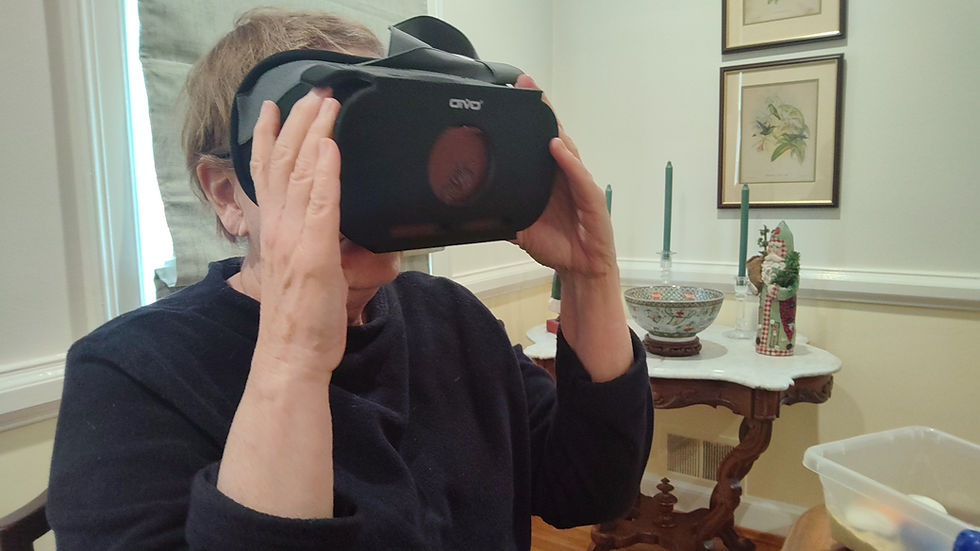
Virtual reality (VR) is often associated with gaming and younger generations, but emerging research suggests it may be just as powerful—and deeply meaningful—for older adults. A qualitative study by Muslu et al. (2024) explores how older individuals experience virtual reality and reveals something striking: for many participants, VR felt like a form of time travel.
Rather than being perceived as a complex or unfamiliar technology, VR offered older adults an emotional, reflective, and often joyful way to reconnect with their memories, identity, and sense of self. The experience went beyond novelty—becoming a bridge between past and present.
Why Virtual Reality Matters in Aging Care
As the global population of adults aged 65 and older continues to grow, there is increasing focus on cognitive health, emotional well-being, and overall quality of life. Aging is frequently accompanied by:
Cognitive changes
Decreased mobility
Social isolation
Loss of meaningful roles
Innovative technologies such as virtual reality present new opportunities to address these challenges by creating immersive, meaningful experiences that stimulate memory, emotion, and engagement.
While much of the existing research on VR emphasizes clinical outcomes, this study posed a different and important question:
How do older adults actually experience virtual reality?
Inside the Study
Researchers conducted in-depth interviews with 37 home-dwelling adults aged 65 and older in Türkiye. Participants used VR headsets to view culturally familiar images, videos, and music related to their historical and social heritage. Following the experience, they participated in one-on-one interviews to share their thoughts and emotional responses.
Four key themes emerged from these conversations.
1. Time Travel Through Virtual Reality
For many participants, VR felt like stepping back into their own past. Familiar music, images, and scenes evoked vivid memories of youth, family, and cultural traditions. Participants described feeling as though they had returned to earlier decades of their lives.
Some emotions were joyful and nostalgic, while others were bittersweet—demonstrating VR’s ability to evoke complex emotional responses.
“I thought I went back to the 1970s. I felt it.”“I remembered my youth… I felt that I missed the past.”
These experiences suggest that VR may function as a modern form of reminiscence therapy, allowing older adults to reconnect with their life stories in an immersive and emotionally rich way.
2. Reflecting on the Past and the Present
Virtual reality also encouraged reflection. Many participants compared the values, traditions, and pace of life from earlier decades with modern society. While some expressed sadness over cultural changes, others found meaning in the opportunity to reflect on their life experiences.
This process mirrors life review—a therapeutic approach commonly used in aging and dementia care to support identity, emotional integration, and acceptance.
3. Perceived Benefits of Virtual Reality
Participants consistently described VR as beneficial in several ways:
Keeping the Mind ActiveMany believed VR could help stimulate memory and delay cognitive decline.
Creating Positive EmotionsParticipants reported feelings of excitement, curiosity, and enjoyment.
Refreshing MemoriesVR helped revive forgotten songs, places, and meaningful life moments.
“It refreshes our memory.”“It keeps the brain fit and active.”
These findings align with growing evidence that VR can support cognitive stimulation, mood enhancement, and meaningful engagement in older adults.
4. What Virtual Reality Means to Older Adults
Perhaps the most compelling insight came from how participants described virtual reality itself. They used metaphors such as:
Cinema
Adventure
Life itself
Painting dreams
A living creature
Many described feeling fully immersed—“like being there.”
“It reminded me of my whole life, from seven to seventy.”
This sense of immersion is what makes VR particularly powerful in therapeutic settings. It does not simply present content; it creates lived experiences.
Implications for Dementia Care, Nursing, and Recreational Therapy
This study challenges the assumption that older adults are resistant to technology. When technology is meaningful, supportive, and person-centered, older adults are not only open to it—they actively engage with it.
Virtual reality should not be viewed merely as entertainment. Instead, it holds significant potential as a therapeutic, non-pharmacological intervention that aligns with the goals of dementia care, nursing practice, and recreational therapy. Experiences can be tailored to the individual, supporting dignity, choice, and preserved abilities.
Emerging evidence suggests that VR can meaningfully support:
Reminiscence
Emotional expression
Cognitive engagement
Overall quality of life
For individuals living with dementia, VR offers a safe and supportive way to access long-term memories that often remain intact even as short-term memory declines. Revisiting familiar places and meaningful experiences can foster comfort, joy, and a renewed sense of identity.
Key Benefits of VR in Dementia Care
Reduces Anxiety and DepressionImmersive experiences can ease agitation, reduce anxiety, and promote feelings of calm and nostalgia—particularly beneficial for individuals experiencing distress, sundowning, or limited mobility.
Enhances Memory and Cognitive EngagementVR can stimulate reminiscence, encourage sustained attention, and spark conversation and curiosity. While long-term cognitive outcomes continue to be studied, short-term engagement benefits are well supported.
Combats Loneliness and Social IsolationVirtual travel and shared experiences help individuals feel connected to the world beyond their physical environment.
Improves Caregiver Understanding and EmpathyVR simulations can allow caregivers and staff to experience daily challenges from a person with dementia’s perspective, fostering empathy and improving person-centered care.
How Virtual Reality Works in Practice
Immersive Experiences: Headsets provide 360-degree views of meaningful places such as childhood neighborhoods, wedding venues, nature scenes, or global landmarks.
Personalization: Content can be tailored to an individual’s life history, preferences, and cultural background.
Neuroplasticity: The multi-sensory engagement of VR may support the brain’s ability to form new pathways or access preserved ones.
Practical Applications
Reminiscence Therapy: Re-experiencing familiar places and life moments
Virtual Travel: Exploring destinations safely from a chair or bed
Caregiver and Staff Training: Simulating daily challenges to improve empathy and care practices
Considerations for Implementation
While VR shows strong promise—particularly for mood, engagement, and emotional well-being—additional long-term research is needed to better understand its cognitive effects. Successful implementation also requires:
Trained and supportive staff
Thoughtful program and content selection
Individualized, person-centered approaches
Attention to comfort, safety, and tolerance
When used intentionally, virtual reality can become a powerful addition to dementia care and recreational therapy programming—supporting not just cognitive engagement, but meaningful moments of connection, identity, and joy.
Resource BMC Geriatr. 2025 Jan 20;25:42. doi: 10.1186/s12877-025-05699-x


Comments